Evolve Brain Training: Boost Your Brain | Brain Training Dubai

Get rid of migraine with brain training

1,200+

Happy Clients

6+ years

of results

4.8 STARS

on Google

Non-Invasive Brain Training: Is It The Best Thing for Migraine Relief?

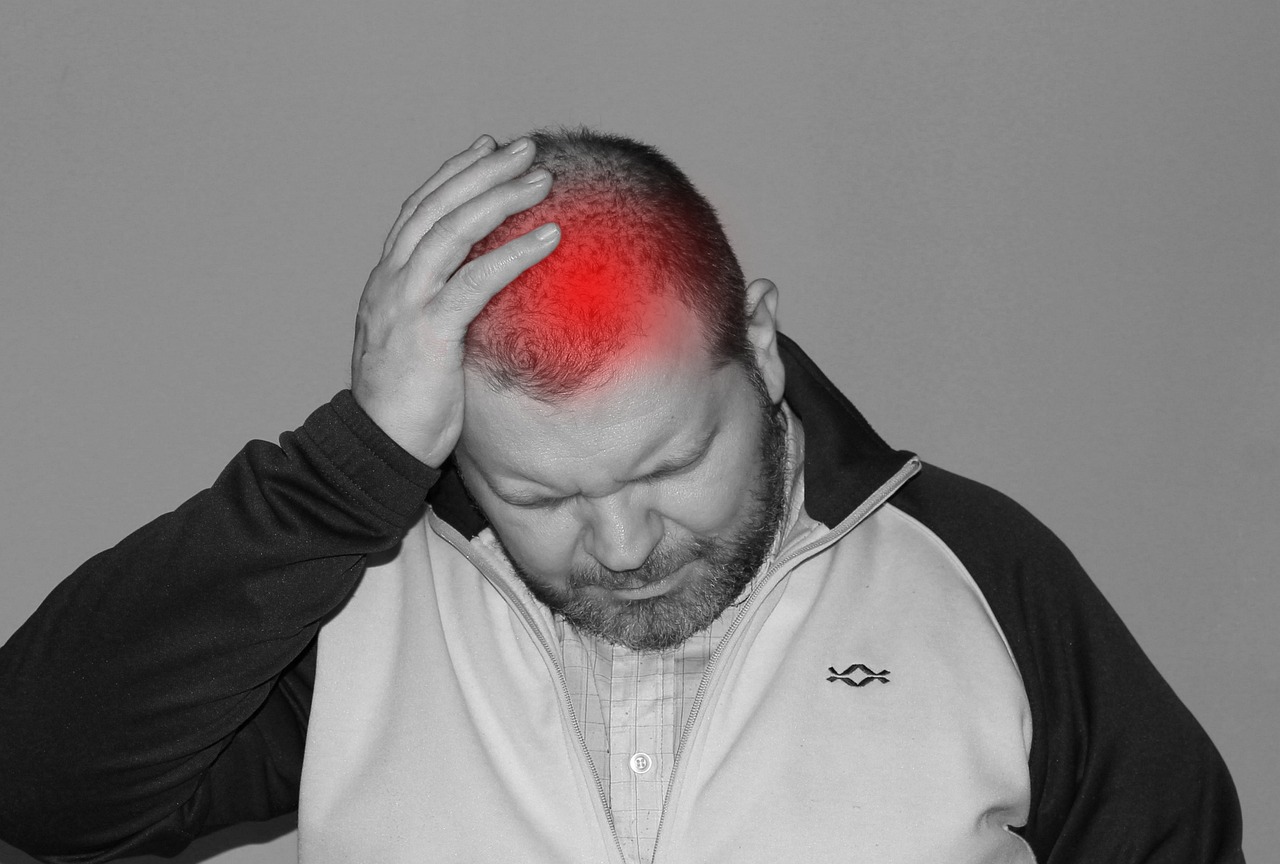
Migraine attacks can seriously affect a person’s quality of life. This type of headache can vary from a dull ache to severe throbbing pain. It typically comes with other symptoms such as nausea, increased sensitivity to light and sounds and vomiting.

As migraine specialists in Dubai, we have seen how migraine can be a psychosomatic health problem, meaning that the state of mind is hugely responsible for triggering these headaches. Other underlying causes of migraines include food allergies, too much consumption of coffee and tea and overexposure to harsh light.

Did You Know?

0 nd
highest cause of disability in the United Arab Emirates.
0 %
of men suffer from migraine.
0 %
of women suffer from migraine.

Common Symptoms

How Brain Training Helps People Get Rid of Migraine

How to cure a migraine fast?

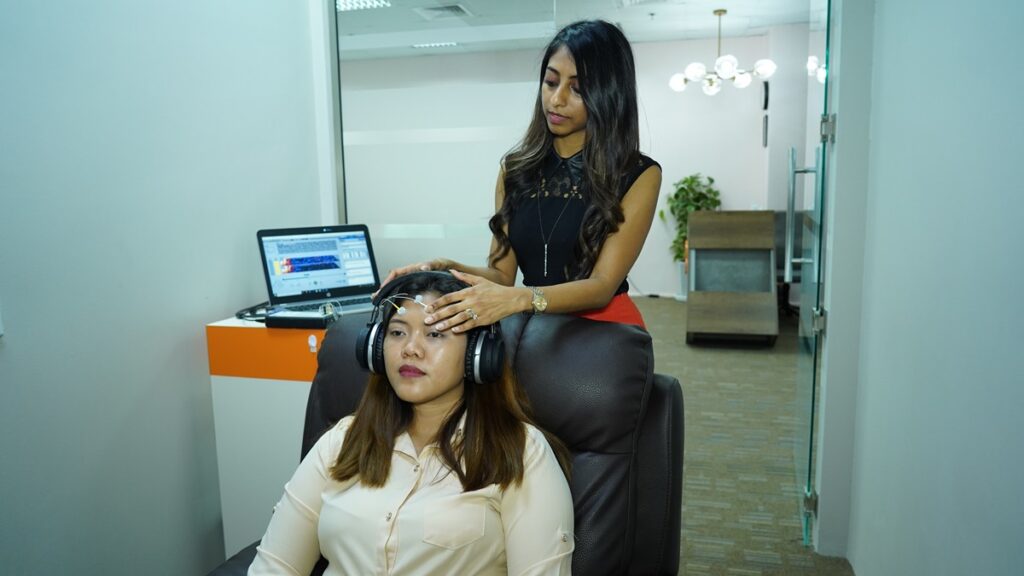
Our approach to migraine treatment in Dubai makes use of EEG sensors to record the activity of your brain wave impulses. In a typical session, these sensors will read your activity while you’re sitting on one of our recliners and watching any show of your liking. When you’re doing this, the screen size and the audio quality will change depending upon your brain waves. The quality gets better every time your brain encourages healthy brain impulses. As and when you keep doing these sessions, your brain will become capable of regulating its activity on its own.

Migraines do not have to be a part of your life forever. To learn more about how our Dubai neurofeedback facility uses non-invasive brain training to ease recurring headaches, schedule a free 15-minute consultation with us using the form below. A member of our team would be happy to go over your options with you and advise you on the best course of treatment.

Testimonials

I had constant stress migraines. They were a really worry because everytime I would have to be at my best and perform, the migraine would get triggered. After my sessions at Evolve Brain training, I can handle stress in a much better way and the migraines have disappeared. Thank you so much Dr. Upasana and team.
M.M

I would get muscle tension migraines every morning when I would wake up. My neck and jaw would always be tensed, and thats what caused my migraines. After my sessions at Evolve, I have seen a 90% reduction in pain. I hardly ever wake up with that debilitating pain. Evolve has changed my life.

K.I.
How It Works

Initial consultation

We will discuss your specific needs and goals during consultation.

Neuropsychosocial assessment

We will do an in-depth assessment to understand your brain’s current strengths and weaknesses

Personalized training plan

Get a customized plan tailored to your specific needs.
Neurofeedback training

We begin your neurofeedback training sessions to help sharpen your brain.

Final assessment

We will repeat the neuropsychosocial assessment to track your progress.

Book Your Free 15-Minute Consultation

Let us help you make mental health a priority. Get a free, no-strings attached session to get started.

  • This field is for validation purposes and should be left unchanged.

Learn More About Neurofeedback

Sitaram R. et al. (2017).

Closed-loop brain training: the science of neurofeedback.Nature Reviews Neuroscience, 18, 86–100.
Read More

Wigton N. & Krigbaum G. (2015).

A Review of qEEG-Guided Neurofeedback. NeuroRegulation, 2(3), 149-155.
Read More

Ros T. et al. (2014).

Tuning pathological brain oscillations with neurofeedback: A systems neuroscience framework. Frontiers in Human Neuroscience, 8(December), Article 1008.
Read More

Ghaziri J. et al. (2013).

Neurofeedback training induces changes in white and gray matter. Clinical EEG and Neuroscience, 44(August 2016), 265–72.
Read More

Coenan A. et al. (2009).

Efficiency of Neurofeedback Treatment in ADHD: the Effects on inattention, Impulsivity and Hyperactivity: a Meta-Analysis.Journal of Clinical EEG & Neuroscience, 40(3), 180-189.
Read More

Yue Hou,Shuqin Zhang,Ning Li,Zhaoyang Huang,Li Wang,Yuping Wang (2021).

Neurofeedback training improves anxiety trait and depressive symptom in GAD. Brain and Behavior. 11. 10.1002/brb3.2024.
Read More

Dreis, Stephanie & Gouger, Angela & Perez, Edward & Russo, G. & Fitzsimmons, Michael & Jones, Mark. (2015).

Using Neurofeedback to Lower Anxiety Symptoms Using Individualized qEEG Protocols: A Pilot Study. NeuroRegulation. 2. 137-148. 10.15540/nr.2.3.137.
Read More

Kerson, C., Sherman, R. A., & Kozlowski, G. P. (2009).

Alpha suppression and symmetry training for generalized anxiety symptoms. Journal of Neurotherapy, 13(3), 146–155.
Read More

Hammond, D.. (2005).

Neurofeedback Treatment of Depression and Anxiety. Journal of Adult Development. 12. 131-137. 10.1007/s10804-005-7029-5.
Read More

Hammond, D.. (2005).

Neurofeedback with anxiety and affective disorders, Child and Adolescent Psychiatric Clinics of North America, Volume 14, Issue 1, 2005, Pages 105-123.
Read More

Thomas, J.E., & Sattlberger, E. (2007).

Treatment of Chronic Anxiety Disorder with Neurotherapy: A Case Study. Journal of Neurotherapy, 2(2).
Read More

Kosari Z, Dadashi M, Maghbouli M, Mostafavi H.(2019).

Comparing the Effectiveness of Neurofeedback and Transcranial Direct Current Stimulation on Sleep Quality of Patients With Migraine. Basic Clin Neurosci. 2019 Nov-Dec;10(6):579-588. doi: 10.32598/BCN.10.6.651.3. Epub 2019 Nov 1. PMID: 32477475; PMCID: PMC7253802.
Read More

Dobrushina, O., Arina, G., Osina, E., & Aziatskaya, G. (2017).

Clinical and Psychological Confirmation of Stabilizing Effect of Neurofeedback in Migraine. European Psychiatry, 41(S1), S253-S253. doi:10.1016/j.eurpsy.2017.02.045
Read More

Walker JE. (2011).

QEEG-guided neurofeedback for recurrent migraine headaches. Clin EEG Neurosci. 2011 Jan;42(1):59-61. doi: 10.1177/155005941104200112. PMID: 21309444.
Read More

Perez-Elvira, Ruben & Carrobles, José & Bote, Diego & Oltra-Cucarella, Javier. (2019).

Efficacy of Live Z-Score Neurofeedback Training for Chronic Insomnia: A Single-Case Study. NeuroRegulation. 6. 93-101. 10.15540/nr.6.2.93.
Read More

Kosari Z, Dadashi M, Maghbouli M, Mostafavi H. (2019).

Comparing the Effectiveness of Neurofeedback and Transcranial Direct Current Stimulation on Sleep Quality of Patients With Migraine. Basic Clinical Neuroscience. 2019;10(6):579-588.
Read More

Frequently Asked Questions

The difference between neurofeedback and biofeedback is their area of focus. Biofeedback uses sensors and feedback technology to monitor and optimize broad physiological functions of the human body, such as your heart rate, pulse or body temperature. Meanwhile, neurofeedback can be seen as a specialized form of biofeedback tailored to the intricacies of the brain. Neurofeedback specifically focuses on the real-time monitoring and feedback of the brain’s electrical activity to help individuals learn to self-regulate and optimize their brain function.

You can find our complete price list here – Price List

Here at Evolve Brain Training we do not process insurance claims. We can provide a statement for you to submit to your insurance company.

Migraines are generally caused by a combination of genetic, neurological, and environmental factors. 

Some findings say migraine attacks occur when the brain exceeds an individual’s sensitivity threshold, particularly when changes in hormones, lack of sleep, or stress disrupt stable conditions. These triggers can include stress, anxiety, hormonal changes, bright lights, loud noises, excessive or insufficient sleep, missing meals, alcohol, and caffeine withdrawal.

A headache is a general term for pain in the head, face, or neck. It can vary in intensity, typically lasts 5 minutes to 4 hours, and often improves with rest or over-the-counter medicine. Meanwhile, a migraine is a neurological condition that causes more severe pain, usually on one side of the head. It may also include symptoms such as nausea, sensitivity to light or sound, and episodes that can last for hours or even days.

At present, there is no permanent cure for migraines. However, the right treatment plan can reduce their frequency and severity. A specialist will recommend medications and lifestyle changes to help the patient manage the symptoms. Behavioral techniques, such as mindfulness-based therapies and cognitive behavioral therapy (CBT), can support the primary treatment plan.

Neurofeedback, offered here at Evolve Brain Training, is another therapy worth considering as it targets the root neurological dysregulation driving migraine. Through a customized plan, neurofeedback can train the brain to self-regulate rather than mask the migraine symptoms after they occur.

The most common signs of a migraine include a severe throbbing or pulsating headache, often on one side of the head, accompanied by nausea, vomiting, and heightened sensitivity to light and sound. Some people also experience dizziness, fatigue, pale skin, and loss of appetite. 

In certain types of migraine, neurological symptoms known as aura (such as visual disturbances, tingling, or temporary vision changes) can appear before the headache phase begins.

Migraines typically last between 4 and 72 hours, though some people experience attacks that persist for several days. The duration varies depending on the individual, the type of migraine, and whether it is treated. 

A migraine episode generally progresses through distinct phases: prodrome, aura (if present), headache, and postdrome. Recovery time after the pain subsides can add to the overall impact of migraines on daily functioning.

A migraine usually feels like an intense, throbbing pain that can range from moderate to completely debilitating. Patients most commonly report feeling it on one side of the head. Migraines are often accompanied by nausea, sensitivity to light and sound, dizziness, and a general sense of fatigue. 

Many people find that physical activity worsens the pain. The experience differs from a tension headache in its severity, duration, and the range of neurological symptoms that come with it.

To deal with migraines, we recommend a combination of the following: 

  • Resting in a quiet, dark environment
  • Staying hydrated
  • Using pain relief medication as directed by a doctor.
  • Identifying and avoiding personal triggers such as stress, disrupted sleep, certain foods, or bright light, for long-term management. 


For people who experience frequent or medication-resistant migraines, non-invasive approaches such as neurofeedback therapy can help by training the brain to regulate the neural activity patterns that contribute to recurring attacks.

There are several recognized types of migraine, with the two most common being migraine without aura and migraine with aura. 

  • Migraine without aura is characterized by moderate to severe head pain without preceding neurological symptoms. 
  • Migraine with aura involves temporary sensory or visual disturbances before the headache begins. 


Other recognized types include chronic migraine, vestibular migraine, hemiplegic migraine, and menstrual migraine, each with distinct patterns and triggers that may require different management strategies.

Get answers to your most urgent neurofeedback questions.
Start with a free first consultation.

Technology Used By

Related Blogs